
Write Your Roots
Acknowledging the Lands You Live On, and the Lands You Come From, by Nicole Marie Clifford Moen

Once upon a time, in a time like now, because all time is now, a child was born to parents who were European settlers on the lands of the Anishinaabe, the Algonquin. She didn’t know she was a settler yet of course, but she was. The parents were in love and welcomed the child. Although they had not been taught by their elders how to raise a child, they got help and they did their best to take care of her and guide her through life. Over time the father’s work changed locations and they moved onto the lands of the Cree, Blackfoot, Stoney and Métis.
She was taught to revere her settler origins. Her people used ingenious new ways of plowing and planting wild prairie. They were resourceful. Her grandmother could stretch a 10-cents-a-pound pork roast for a full week. All of her grandparents exhibited great courage to come from places far away in France, England, Wales and Norway into the unknown of new lands. All true. She was proud of their ways and the things they taught her.
After several years of living in the domineering paradigm that commodifies our lives, ways of being and the lands, her father became unable to maintain his sanity and her mother had to end the marriage. The child, now a youth, and profoundly sensitive, was heartbroken and without support in her sadness and questions.
As a young adult and in a first marriage, the child moved to an island, the coastal home of the lək̓ʷəŋən, and remains there today. After the move, she had a deepening curiosity of how to belong to a place now that there was no other family around, of wanting to know where ancestors were, and who ancestors were, and whose land this was, right here.
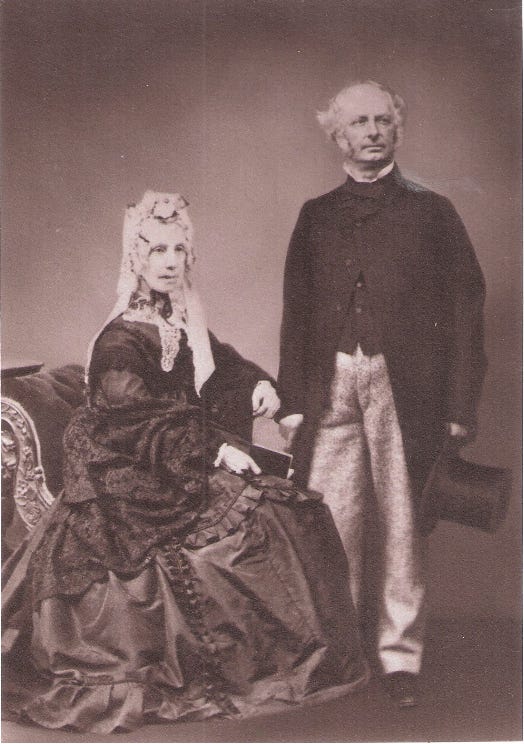
(She discovered, for example, this photo of one of her Great Great Great Grandfathers and Mothers in England.)
Thus began decades of exploration, travel, ancestral research, writing, questioning, and, truth be told, pain, hardship, disintegration, confusion, longing, sadness and anger. The other side of that difficult coin for the child though was an increasing understanding of what it means to not live on your own ancestral lands, to not walk over the bones of your own people, to not know your own stories and myths, to have no nearby familial support. And mixed in there were experiences of deep joys, finding her beloved, having a child, dear friendships and richness beyond words. And, she was starting to understand on whose lives and lands her life had been built without their consent.
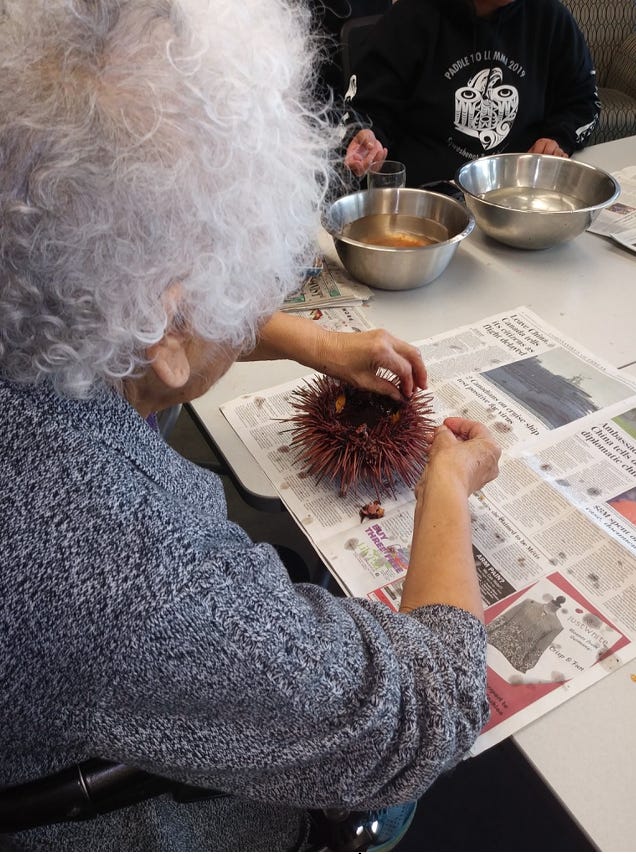
(She helped set up an event where lək̓ʷəŋən Elders could enjoy their ancestral foods. This is sea urchin.)
There was also learning about how to navigate a family marked by what we colonially call mental illness. The child began questioning anything and everything taught about health and healing, and noticed that the map given was not the territory she had travelled. She started to write about this madness, her mad roots. This writing, this spelling-ness, this using of sound symbols on pages to describe and think and feel things through, became stories, became poems, became books. Through this writing, her health and healing navigation eventually merged with ancestral perspectives, and as the child became elder, new and ancient ways of being here on this wee planet began to make themselves known. It arose that the way to “save the world” was to turn to indigenous thinking and ways of being here. That that is what would turn our current unsustainable trajectories toward sustainable ones.
Concurrently, she noticed that ancestral skills and ways began to bubble up from deep song time, deep roots, deep wells of memory. Skills and ways such as: clairvoyance (all the “clairs” actually like audience, sentient etc.), healing arts, poetry prowess, compassion for and relationships with all life. Animals, plants, trees, stones, fishes, birds, spirits, waters, even the winds became her allies and friends.
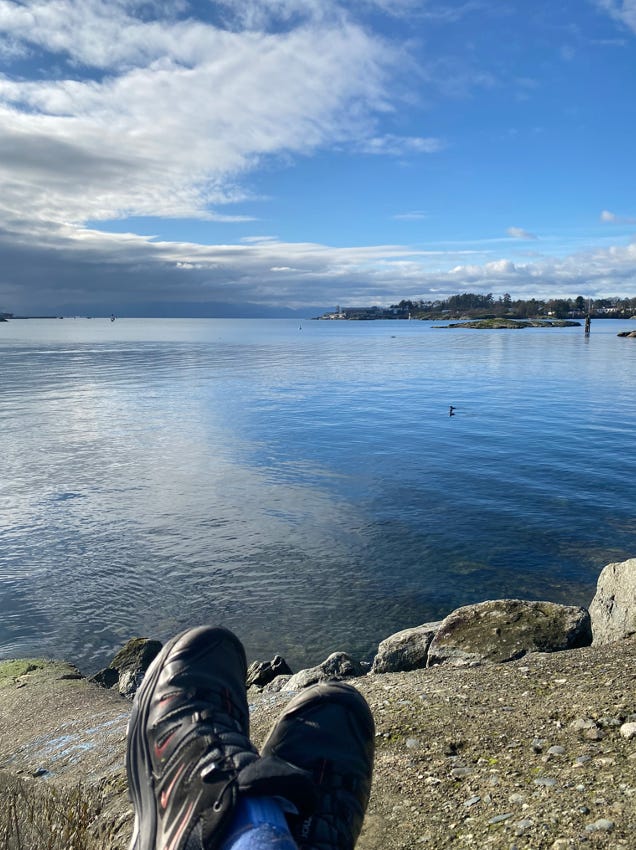
(Following her roots into an Old Norse practice, she started sitting daily on her High Seat –a single place outside, here on lək̓ʷəŋən homelands, where she could learn the land and the land could learn her.)
She saw how the waves of colonization around the world, including that of her own people, either ushered in or strengthened The Forgetting Times, created cultures emerging from Pain Body, stunted natural maturations as more and more needed initiations and ceremony were banned or shunned. She saw the destruction caused when, instead of re-learning to be nature from the Beautiful Peoples on the new lands her people had migrated to, they instead maintained The Forgetting and pushed others to forget too. Yet, at the same time, she followed along with the modern progresses (regresses) such as the path from high fidelity, to wireless fidelity, to infidelity to her ancestral ways. This gave her no internal sense of satisfaction, belonging or connection, but she did it nonetheless.
And still she wrote and wrote. Wrote to understand, wrote to find the questions to the questions, wrote to think, to feel, to empty, and then to fill. She wrote to find the symbols that would point the way to the paths, knowings, kennings, healings, and connectings. Like the yellow arrows on the Camino de Santiago point the way to walk, she kept an eye and heart out for the symbols for “walk here” and “learn this” and “tend this” and “step away from this” too.
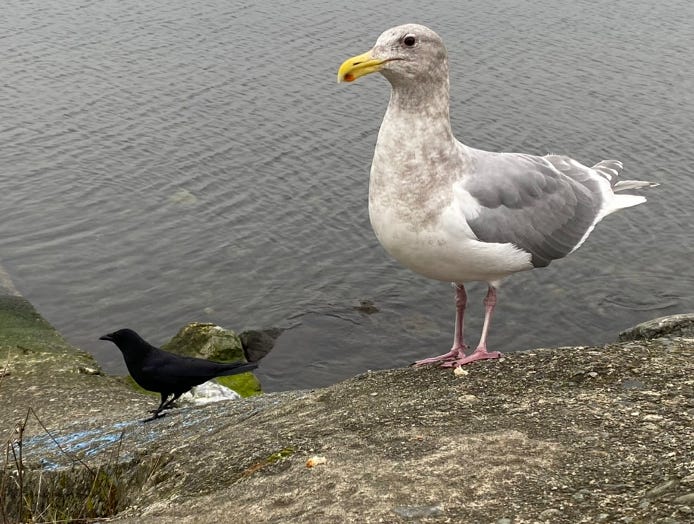
(The seagulls and crows called her out onto the land to find a High Seat and they occasionally come to visit. They were “walk here” and “tend this” symbols and messengers.)
Eventually, as is the way of the ancestors, as is the responsibility that’s part of the learning of ancestral gifts, she began to pass along these riches of learning, experience and questioning, including offerings of how others could write/right their roots as well.
The End.
***
Please allow me to introduce myself.
Thank you. Greetings.
My name is Nicole Marie Clifford Moen.
I live uninvited and within deep gratitude
on the stolen home, lands, of the lək̓ʷəŋən People.
My daughter was birthed on these lands.
My mother’s name is Elizabeth.
Her parents are Albert and Marcelle.
My father’s name is David.
His parents are Arthur and Helen.
None of the above ever lived on their own homelands.
***
I’m not sure of what it’s like where you live, but here on the West Coast of Southern British Columbia, Canada, most settler meetings, events, gatherings of all kinds start with an acknowledgement of the lands we’re on. And for most of us, this land is not our own ancestral land. Acknowledgements usually sound like, “I want to acknowledge that we’re here on the the unceded territory of the lək̓ʷəŋən.” Or something similar. (The lək̓ʷəŋən are the indigenous people who have been here on the southern tip of Vancouver Island for thousands of years.) I mean, it’s sincerely lovely to say an acknowledgement like this, I started there too in 2012, and it scratches the surface of the surface of the surface of what’s actually needed for true conciliation (there’s no reconciliation without conciliation in the first place), for true reciprocity, for true releasing of conditioned colonizing ways of being.
***
All this weaves together: real land acknowledgements about where I currently am, require me to stand in my own story, on my own lands.
***
Here’s my new 3 Part offering to you:
Write Your Roots:
How to ACKNOWLEDGE LANDS Where You ARE, and, Where You’re FROM
for folks with European ancestry that live in North America
*Beta Offering*
Become WEAVERS of land acknowledgements
in ways that are respectful and alive.
Written, Spoken and Manifested.
Wisdom, Wonder, Wander
Experience, Environment
Acknowledgement, Accountability
Vision, Value
Education
Relationships, Ritual
Story, (Un)Settling, Songsailing
Details and Registration here. https://www.gatheringroots.ca/writeyouroots
Less 3 Part “course” or “class” and more an opening, a doorway through which I’m inviting you to step with me upon a journey, a pilgrimage that has practical, grounded outcomes. First, you’ll wend your way into a deeper understanding and honouring of the lands you’re on, Where You ARE. Learn how to write about that land and to read or speak what you learn.
Then we shift into Where You’re FROM. You’re not attending for me to tell you what to write, but to learn to tend and weave your own deep memory gathering, your own capacity to reassemble what’s been lost or forgotten, your own ancestral ways of hearing or seeing what arises out of the depths of mystery and material and non-material realms. And then, write about it. Write and then art or craft from that collecting as a project in Part 3 – a manifestation of your own handcestry. Handcestry draws on your embodied memory, the memory in your hands, the memory each of your cells carries.
In Sand Talk: How Indigenous Thinking Can Save the World, Tyson Yunkaporta says,
“The assistance I’m talking about comes from sharing patterns of knowledge and ways of thinking that will help trigger the ancestral knowledge hidden inside. The assistance people need is not in learning about Aboriginal Knowledge but in remember their own.”
In Write Your Roots we will be working toward stepping in that same direction. I hope you can join us.
Video Q & A for Write Your Roots here.
Details and Registration here. https://www.gatheringroots.ca/writeyouroots
More about Nicole here and here. https://www.gatheringroots.ca/nicole https://www.gatheringroots.ca/credentials
Beautifully written Nicole, thank you!
Thanks so much for your story Nicole. I feel ripples under my feet as I read it here in the Netherlands.